Case Studies
The method applied to real projects
All three pillars brought together — starting point, deterministic decisions, creative latitude for the AI, workflow, result.
F1
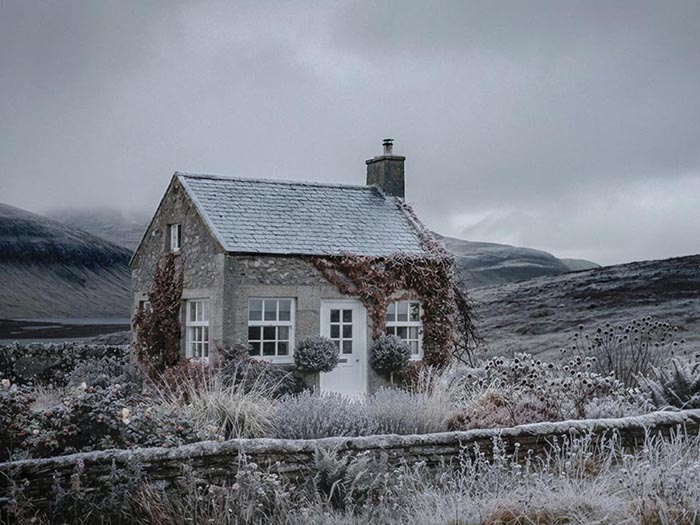
Highland Cottage
From Blender skeleton to photographic result in three steps.
Minimal Blender geometry, maximum AI interpretation — and a composition preserved exactly through every step. The study shows how far the RAY-L workflow carries with minimal effort.
F2 · Food
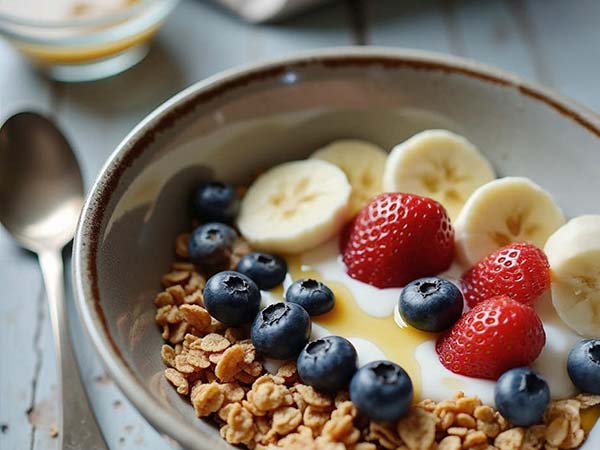
Granola Bowl
Why the material in Blender is the real tool for ControlNet Canny.
Food photography presents a specific challenge: the actual subject doesn't exist in Blender at all, and the materials that make a bowl look attractive produce noise in Canny instead of edges. The study shows how changing materials in Blender — not adjusting thresholds — turns a noise field into a clean edge map. Plus: why Flux is the stronger choice for organic, moist subjects, and how a T5XXL prompt makes a food shot genuinely appetizing.
F3
Interior Visualization
planned
Same room, two lighting moods, one Blender scene. How far a single scene setup can be varied — without touching the composition.
F4
Architecture Visualization
planned
Exterior shot, changing light, complex geometry. Where the limits of the workflow lie — and where they don't.