About
In the end, it all comes down to light
I've been a professional advertising photographer for more than 30 years.
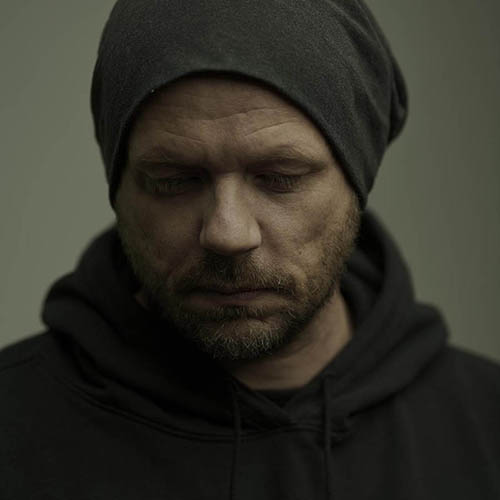
Photo: Martina Zier — martina-zier.com
New techniques have never interested me for the technology itself. What's always interested me is how they extend the ways I can express myself through images — often before they were even ready for a professional workflow. With digital photography, it was speed and control. With CGI, the chance to realize images that a conventional production couldn't have — often simply for budget reasons. With AI image generation, it's exactly the same, just more extreme.
The standard has never changed: a result has to hold up to professional demands. Otherwise it's worthless for my work, no matter how impressive it looks.
Over the past years I've produced product renderings for clients and advertising agencies, and architectural visualizations for architecture and development firms. I've advised photo studios on integrating CGI into their photography workflow, and that exact practice is the difference between a tool that works technically and one that understands where a professional result actually fails.
That's where RAY-L comes from — not a technical experiment, but the answer to questions out of real production work. How deterministic control from Blender and the stochastic strength of AI come together into a resilient image is something I describe in the Concept section of this site.
RAY-L is being developed primarily for Windows with Nvidia hardware — the standard environment for ComfyUI workflows. On my own Mac with Apple Silicon it already runs stably, via an adapted path; the Windows version is close to completion.
This website isn't marketing copy about my method — it is the method, documented in articles, images, and case studies. Every image here (except the portrait on this page, which is by Martina Zier — www.martina-zier.com) comes from my own production, with the prompt visible and the path traceable.
It's for anyone who wants to create images professionally and with intent: advertising photographers, product visualizers, architectural visualizers, designers, CGI and AI practitioners alike — from apprentice to professional production. I've also been active in photography vocational training and teacher education for 15 years.
Position
I haven't owned a car in years, I don't fly, and I try to live as minimally as possible. I also teach the professional use of AI image generation — a technology that consumes energy on a scale I can't downplay, and concentrates economic power in very few hands. I've tried to resolve that contradiction. It doesn't resolve. What remains is the question of how to act within it — and why I continue anyway.
Partners & Networks